
Five ways a health center loses money it already earned.
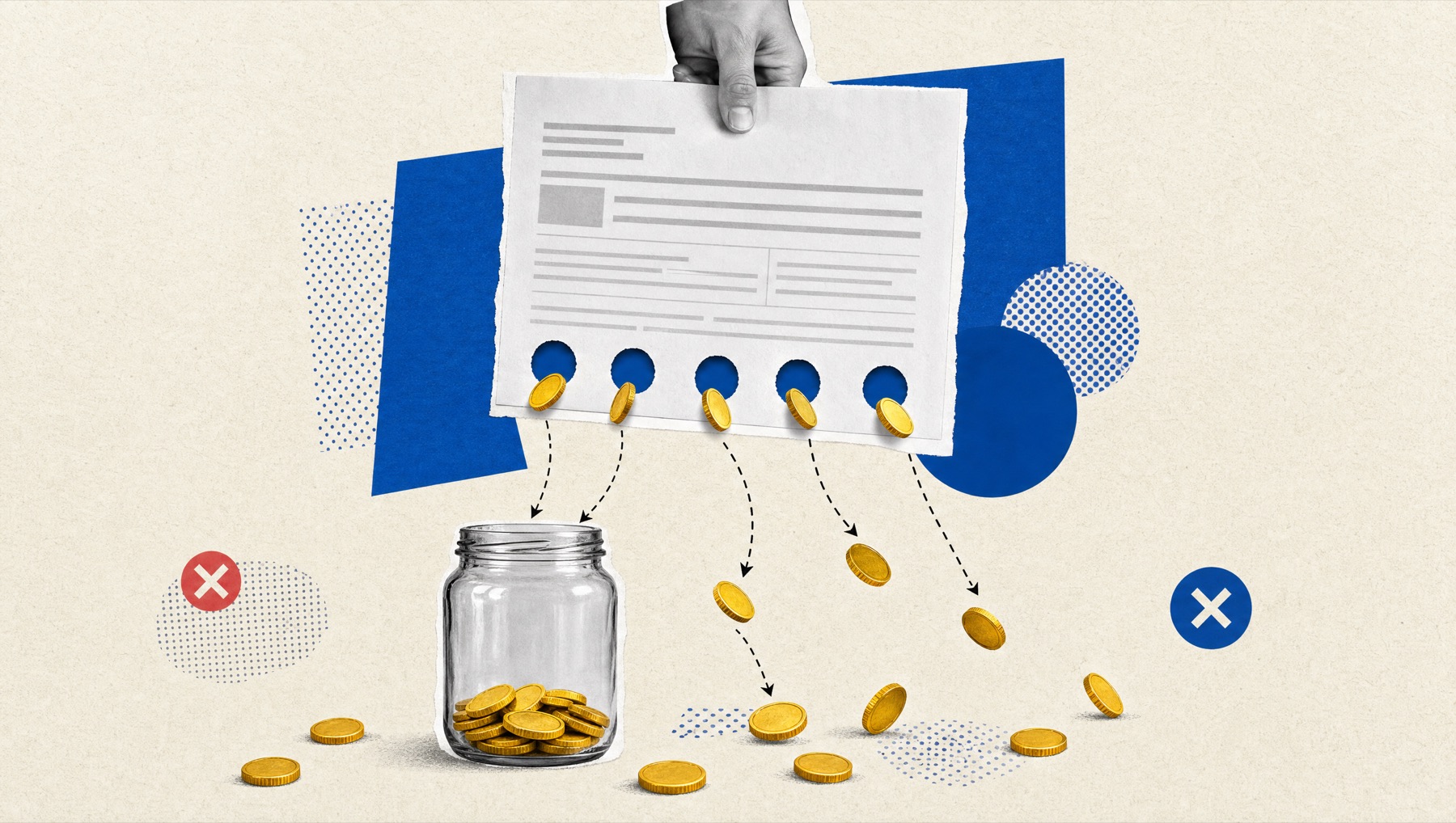
There are two ways for a health center to be short of money. One is that it did not do enough billable work. The other is that it did the work and never got paid for it.
In most centers the second number is larger, and it is the one that never makes it onto a board slide.
Where it goes
- Care that was delivered but never documented to the standard the payer requires, so the claim cannot be supported.
- Claims that were denied and never reworked, because reworking them is somebody's fourth priority.
- Care management programs the center qualifies for and does not bill, because running them takes staff time nobody has.
- Visits that became uncompensated when a patient's coverage lapsed between appointments.
- Signatures that arrived late enough to push a service outside its billing window.
The care management gap
This is the largest and the quietest one.
Medicare pays for work that happens between visits. Monthly chronic care management for patients with two or more chronic conditions. Remote monitoring of blood pressure and blood glucose. Transitional care in the thirty days after a hospital discharge. Physician oversight of patients receiving home health or hospice care. Health centers are eligible to bill for this work.
Most do not, or do so for a small fraction of the patients who qualify. The reason is almost never that nobody knows the codes exist. It is that each program requires tracked time, monthly patient contact, and documentation assembled and kept clean, month after month, across hundreds of patients. That is an operational lift, not a billing decision.
A panel with several hundred patients carrying two or more chronic conditions is an ordinary health center panel. The revenue attached to serving those patients properly, and documenting that you did, is not a rounding error.
Denials
Denied claims are the visible version of the same problem. A denial is usually not a refusal to pay. It is a request for something missing: a modifier, an authorization number, a signature, a diagnosis that does not support the service billed. Most denials can be appealed and a large share are eventually paid. Appeals take time, and time is the resource the center does not have, so a portion of denials simply age out.
Coverage churn
Then there is the payer side, which the center does not control at all. The Medicaid unwinding that began in 2023 moved more than 25 million people off Medicaid rolls, and according to KFF's tracking most of those disenrollments were procedural rather than a finding that someone had become ineligible. Health centers absorbed much of that as uncompensated care. They kept seeing the patients. The payment stopped.
Why the distinction matters
"We need more funding" and "we need to collect what we have already earned" are different problems with different solutions, and only one of them sits inside the center's control.
Grants and appropriations are decided elsewhere, on a political calendar. The gap between service delivered and claim closed is an operational problem. It is made of documentation, follow-up, and time, and none of those three have to be done by the clinical team.
That distinction is the reason CHC Continuum exists. Not to find a health center new money, but to stop the money it has already earned from leaking out of the space between the visit and the payment.
Sources
- 1.Centers for Medicare & Medicaid Services, care management and remote monitoring billing policy for FQHCs and RHCs.
- 2.KFF, Medicaid Enrollment and Unwinding Tracker.
- 3.Health Resources and Services Administration (HRSA), Health Center Program Uniform Data System.
This is what we built to fix it.
The operational layer behind everything written about here.